

AUTHOR: Soumen Basu West Bengal Biodiversity Board
In the year 2009 ‘Aila’ – a severe cyclonic storm hit West Bengal and part of Odisha The cyclone made landfall near Sagar island at a speed of 130 km/hr. The first hand impact was borne by South and North 24 Parganas apart from Kolkata & East Medinipur. Heavy rains and the associated storm surge led to massive flooding, inundating agricultural fields and destroying stored grains and vegetables. As per reports 500000 homes were damaged, 2.3 million peoples were displaced and the total damage in West Bengal was estimated to be Rs.18 billion (US$380 million). Around 100 peoples lost their lives from the direct impact of Aila followed by sufferings due to water borne disease and blood dysentery
It was not the end. Aila was followed by Sidr, Hudhud, Bulbul, Yaas and the mega cyclone Amphan, during the lockdown. The loss of life, property, livelihood, animals is devastating. A major chunk of the government exchequer was repurposed for relief. All these disasters have forced a major percentage of people to move to the cities for economic opportunities, increasing the load on the already overcrowded cities of West Bengal.
According to a Global Report, West Bengal is set to become the 60th most climate risk-prone region in the world by 2050. The Bay of Bengal region was hit by 41 severe cyclonic storms and 21 cyclonic storms in May between 1891 and 2018, says the Assessment of Climate Change over the Indian region. However, it remains to be seen whether these reports and statistics have had any meaningful impact in addressing climate change in West Bengal.
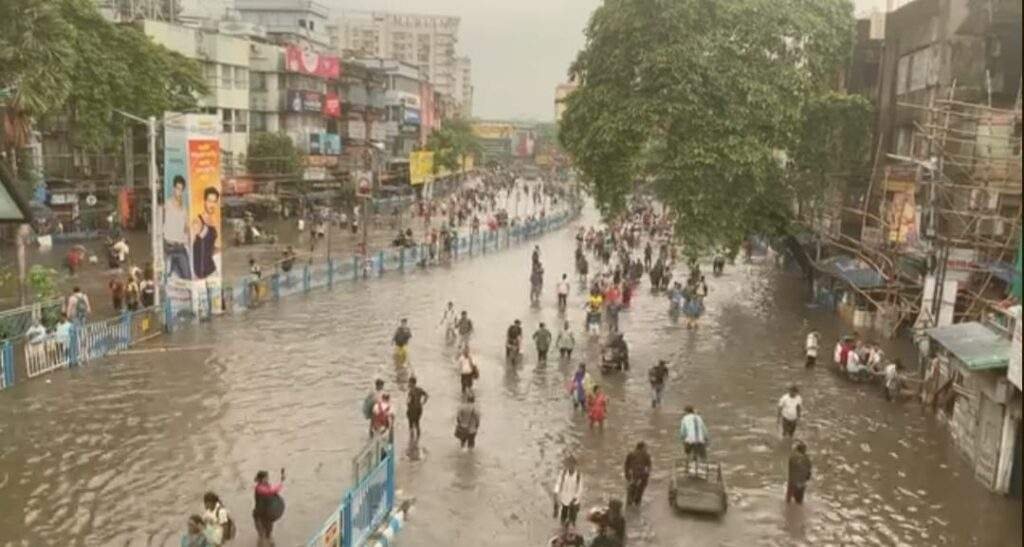
Until recently, most of us living in Kolkata believed we were largely safe from natural disasters such as storms and floods. However, the changing climate is gradually revealing how vulnerable a city can become when it lacks adequate mechanisms to cope with the impacts of climate change. The location of Kolkata along the norther fringes of the Ganga Delta – makes it vulnerable and prone to the impacts of climate change and natural disasters. Being located on a flat terrain it lacks inadequate natural drainage relief causing flooding and being in close proximity to the coast, it is susceptible to sea level rise and storm surge.
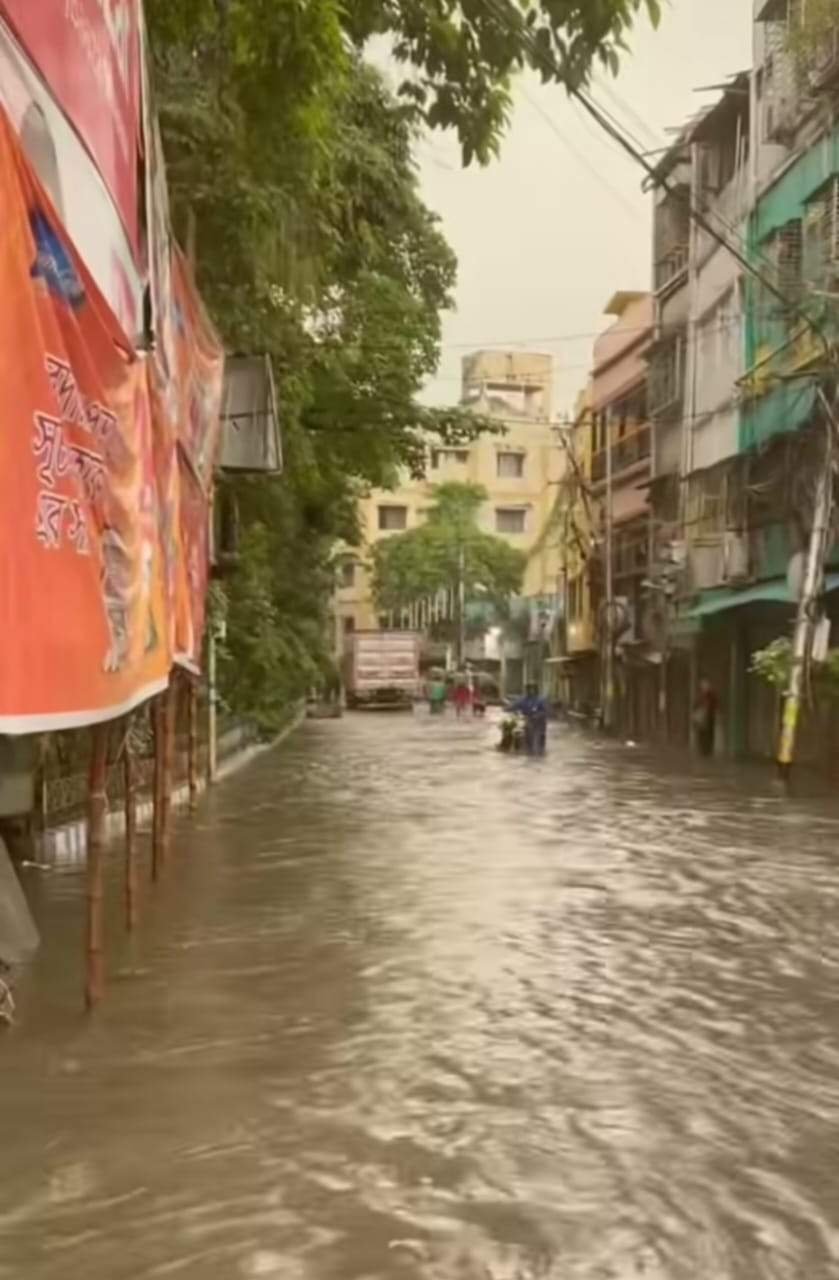
In recent weeks, Kolkata mourned the untimely deaths of eleven citizens—electrocuted in waterlogged streets following an unprecedented spell of torrential rain. Entire neighbourhoods were submerged for days. The victims, unaware of the lurking dangers, were killed not by chance, but by systemic negligence. Their deaths are not anomalies; they are the consequences of a city that has chronically failed to integrate environmental foresight into its political and administrative vision.

At first glance, such tragedies may not appear to be environmental issues. But they are,
fundamentally, rooted in environmental mismanagement. The intense rainfall overwhelmed Kolkata’s archaic drainage systems, causing waterlogging that led to fatal electrical short circuits. This chain of events illustrates how climate vulnerability, when compounded by decaying infrastructure, turns natural events into human catastrophes.
In summer months, Kolkata will face a different—but equally unforgiving—climate reality: searing heatwaves. Last year, the rising mercury claimed lives, particularly among the poor and elderly. While the air-conditioning industry thrives, it paradoxically exacerbates the urban heat island effect, further driving emissions and contributing to a self-perpetuating climate crisis.
Despite being identified by the United Nations as one of the most climate-vulnerable cities globally, Kolkata continues to sleepwalk into disaster. The city’s green cover has plummeted below 30%—well under national benchmarks. Yet there is no coherent or sustained effort to reverse this decline. On the contrary, rampant pruning of avenue trees, often ahead of festive celebrations, reflects a mind-set that views greenery as ornamental rather than essential.
No sooner had the incident in Kolkata subsided than North Bengal was struck by a devastating landslide, followed by flash floods that swept across vast areas of the region. Although the official death toll currently stands at forty, it is only a matter of time before many more unfortunate bodies are recovered once the waters fully recede and the debris is cleared.
For a long time, various scientific studies and data had been indicating that — climate change is disrupting ecological interactions across North Bengal, resulting in significant alterations in species relationships and the overall dynamics of local ecosystems.
The biodiversity of North Bengal plays a crucial role in maintaining ecological balance and providing essential ecosystem services. Forests act as carbon sinks, mitigating climate change impacts, while rivers and wetlands regulate water flow, support agriculture, and sustain livelihoods. The region’s biodiversity also underpins cultural practices and traditional knowledge systems of indigenous communities, fostering a deep connection between people and nature.
But over the past four to five decades what we have seen can be termed in a word, a systematic destruction of nature. Habitat loss due to deforestation, land-use change, and rampant infrastructure development has significantly disrupted ecological processes.
Both the Central and State Governments have begun an extensive drive for development across the hills. Hills are being cut to make new roads, tunnels are being dug through mountains, railway lines are being blasted through rocky terrain, and concrete dams are being built across mountain rivers. In addition, new hotels and lodges are being constructed for tourists. All these activities have placed a burden far beyond the carrying capacity of the fragile mountain ecosystem. The hills can no longer endure this strain — the devastation we are witnessing today is a direct consequence of that.
Wasn’t there any warning of these oncoming danger?
For several decades, nature has been giving warnings in its own way. Climate change in North Bengal is manifesting through rising temperatures, altered precipitation patterns, increased frequency of extreme weather events, glacier retreat, and shifts in ecological zones. These changes pose significant challenges to the region’s biodiversity, ecosystems, and human wellbeing. Several reports and statistical data has raised alarm about the change in climate in the region. But very little has been done to mitigate these impacts through integrated approaches that prioritize climate adaptation strategies, sustainable land use practices, and conservation efforts aimed at enhancing resilience and protecting the natural heritage of North Bengal for future generations. We can now see the consequences of that right before our eyes.
The question, then, is stark: why is the environment so systematically ignored in political, administrative, and public consciousness?
Let us unpack the layers of this failure, stakeholder by stakeholder.
1. Short-Term Priorities and the Neglect of Future Needs
Despite 76 years of democratic evolution, environmental issues remain an afterthought in public discourse. Electoral manifestos occasionally mention climate concerns, but these are usually token gestures rather than serious commitments. Climate change is often seen as a distant, abstract issue—disconnected from the immediate concerns that drive everyday decision-making, even in cities like Kolkata that are already facing its harsh realities
Consider the case of Tolly’s Nalla, once a vital 28-km canal system built in 1777 to drain storm water and navigation is now in peril. Over the decades, it has become a toxic, stagnant drain— choked by encroachments, metro construction, and unchecked siltation—despite crores spent under different schemes. Leaders often make strong pledges at international climate summits, but those commitments frequently lose momentum once they return home. This single example of a silted canal, along with hundreds of choked streams, filled-up wetlands, and encroached small rivers, stands as grim evidence that we are still blindly waiting for our own ruin
The truth is sobering: the challenge isn’t a lack of expertise, but a lack of commitment to act. Environmental policies lose out to populist, vote-driven optics. Long-term sustainability is sacrificed at the altar of immediate electoral gains.
2. Gaps in Policy Implementation and Enforcement
Take the example of the ban on single-use plastics in July 2022. Initially hailed as a major step forward, enforcement dwindled within months. Today, plastic bags are once again omnipresent—blocking drains, choking rivers, and leaching toxins into the environment, increasing public health hazards. Recycling and waste segregation practices remain either poorly implemented or ignored altogether—especially during festivals, when waste generation peaks.
The East Kolkata Wetlands, a Ramsar site once lauded as the city’s natural wastewater treatment system, now face rampant encroachment and degradation. Blocked inlets, illegal landfills, and unchecked construction have reduced their capacity to channel floodwaters. Along with this Ramsar site, other waterbodies of different sizes and ownerships are fast vanishing from the landscape of the city further reducing the chance of speedy dispersal of storm water or overflowing water of Ganga during high tide times.
Even twenty years ago, the roadside drainage channels that ran along highways and major roads mostly existed. Today, most of them have either been filled up or leased out for commercial activities. As a result, the natural pathways that once carried excess rainwater or floodwater through these drains into rivers and canals have been blocked. Consequently, flooding has now become our inevitable fate.
In the winter months, air quality in Kolkata plummets to hazardous levels due to unchecked pollution and the lack of a proactive strategy. However, the situation is marginally better nowadays. Post-monsoon, vector-borne diseases like dengue and enteric infections return like clockwork. It seems plausible that entrenched corruption has found its way into regulatory mechanisms, further weakening environmental governance.
3. Rules with No Roar
India’s environmental laws are not toothless. The Environment Protection Act, the Air and Water Acts, and the National Green Tribunal (NGT) all offer legal recourse. But enforcement is sluggish, and penalties, when imposed, are rarely deterrents. Environmental litigation often becomes an exercise in delay—with endless adjournments turning serious cases into bureaucratic farce
Many industrial units release untreated effluents into canals and rivers without consequence. Noise pollution, especially during religious festivals, has even led to violent reprisals against those who dared protest. These incidents expose the yawning gap between law and justice.
4. Cultural Practices and Environmental Blind Spots
Cultural traditions often serve as a convenient shield against reform. The immersion of idols, mass prayer rituals by riverbanks, and open-air burning by riversides—all continue with minimal regulation, despite their impact on water bodies and air quality. Attempting to regulate such practices would meet with cultural pushback, limiting administrative enforcement.
There is some progress: awareness around environmentally responsible idol immersion has grown in Kolkata. Designated ponds and post-immersion clean-up drives are now common— within city limits. But beyond urban cores, enforcement remains spotty and inconsistent.
5. Infrastructure vs. Ecology: A False Binary
Kolkata is growing. Flyovers, metro extensions, and housing projects cater to a rising population. But urban expansion has come at the expense of green spaces, wetlands, and ecological buffers. Compensatory afforestation—when it happens at all—is cosmetic. Real estate developments in ecologically sensitive zones continue to receive approvals, often through opaque mechanisms. The motivation? You don’t need much imagination to guess.
Research reveals that urban sprawl, increased urban density, shrinking water surface areas are the most important phenomenon affecting the run-off and drainage of the city. Climate event have been multiplying over the years but there is inadequate plan to combat the consequences.
6. Youth and Education: A Disconnected Generation
Environmental education in schools is largely theoretical. Students learn about pollution and biodiversity through textbooks—but rarely engage with wetlands, forest trails, or real-time ecological monitoring.
In an urban landscape dominated by concrete, traffic, and pollution, children grow up alienated from nature. As a result, they view environmental crises as distant, rural issues—not as challenges embedded in their daily reality. If pollution, waste, waterlogging etc. are normalized, they may believe those are inevitable rather than problems to solve. If we are to equip the next generation to meet climate challenges, we must bridge this divide with handson ecological learning.
7. Media: Moments Captured, Connections Missed
A section of Media coverage tends to spike around disasters—floods, heatwaves, dengue outbreaks—only to vanish once the headlines fade. Deeper, sustained reporting on chronic environmental degradation is rare.
Even significant policy developments, like the Kolkata Climate Action Plan (KCAP), receive minimal follow-up. Where’s the spotlight on where the funds go, what gets done, and who it actually helps?
Moreover, the stories of the most vulnerable—slum dwellers, sanitation workers, street vendors—are often excluded from climate narratives, despite their disproportionate exposure to environmental hazards.
8. Policies Tiptoe While the Climate Runs
Though the West Bengal State Action Plan on Climate Change (WBSAPCC) exists on paper, its implementation remains sluggish. The Heat Action Plan, a vital public health safeguard, has yet to be adequately drafted or executed for Kolkata—despite the rising frequency of deadly heatwaves.
There are no comprehensive, enforceable guidelines for climate-resilient infrastructure. Urban planning continues as if climate risks are hypothetical. Meanwhile, disaster preparedness, especially in the suburbs, remains critically inadequate.
A Wake-Up Call We Can No Longer Ignore
The relationship between human life and the environment is continuous—from birth to death and beyond. And yet, our collective response to environmental degradation remains fragmented, delayed, and insufficient.
Indeed, there is no other way.
If states like Kerala, Tamil Nadu, Himachal Pradesh, Gujarat, and Maharashtra can design and implement climate action frameworks, why must Kolkata—one of the world's most climate-vulnerable cities—continue to flounder?
This is not a question for the future. It is a challenge for today. The time for half-measures and tokenism is over. Kolkata must rise—not just to protect its citizens from disaster, but to reimagine itself as a climate-resilient city that leads, rather than lags, in the age of environmental reckoning.
References
- Das, Shatabdi. 2022. Kolkata and Climate Crisis. In: Policies & Practices, Issue No.140. Mahanirban Calcutta Research Group, Kolkata, pp. 19–22. ISSN: 2348-0297.
- Das, Mahadeb. 2024. Impact of Climate Change on North Bengal's Rich Biodiversity: A Comprehensive Analysis. International Journal of Humanities & Social Science Studies (IJHSSS), 10(5): 133–146. DOI: 10.29032/ijhsss.v10.i5.2024.133-146.